Overview
The Railroad
System at a Glance
Choosing Your Role
Session Walkthrough
Station Screens
Learn More
System at a Glance
Everything runs over a private WiFi network local to the layout
(NYE_Layout), with a Raspberry Pi 5 acting as the central server. All
devices talk to each other over MQTT
— there's no cloud dependency and no internet connection required to operate.
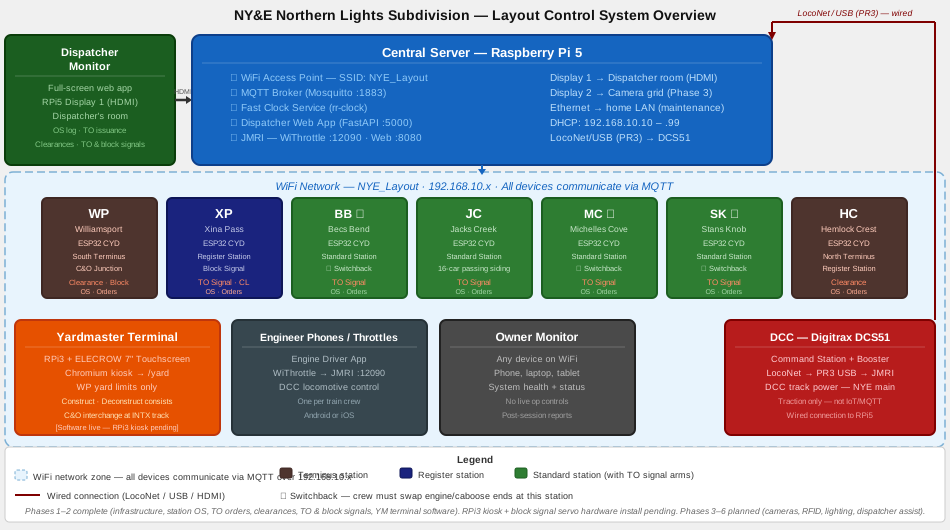
The pieces
- Central Server (RPi5) — runs the WiFi access point, MQTT broker, fast clock service, the Dispatcher web app, and a JMRI bridge to the DCC system. The Dispatcher's monitor connects here over HDMI.
- Seven Station Units — one ESP32 "CYD" (Cheap Yellow Display) touchscreen per station, handling OS reports, train order delivery, and (at five stations) physical TO signal arms.
- Yardmaster Terminal — a touchscreen at Williamsport for building and breaking down consists within yard limits. Software is complete and already live on the server; the dedicated RPi3 kiosk hardware is the remaining install step.
- Engineer Phones / Throttles — each train crew runs a WiThrottle app for DCC locomotive control, talking to JMRI on the server.
- Owner Monitor — any device on the WiFi can check system health and post-session reports; it has no live operating controls.
- DCC — Digitrax DCS51 — the actual track power and locomotive command system. It's wired to the server for JMRI integration but is otherwise independent of the MQTT/IoT side — traction control isn't carried over WiFi.
Phases 1–2 of the build are complete: infrastructure, station OS firmware, train orders, clearances, and both TO and block signals. Planned future phases add trackside cameras, RFID block detection, day/night lighting, and dispatcher-assist tooling for newer operators.